


Washed Coffee Process: A Practical Guide to a Clean Profile
If you’ve ever tasted a coffee that feels crisp, bright, and laser-focused, where florals and citrus pop without heavy fruit funk chances are you were drinking a lot made with the washed coffee process. For roasters, green buyers, and baristas, washed coffees are a reliable baseline for evaluating terroir, variety, and roast development. For producers, the method offers repeatability and a clear pathway to specialty quality when fermentation and drying are well-managed.
This guide breaks down the washed coffee process in professional detail: what it is, how it works, what variables matter most, and how it shapes flavor in the cup.
Contents
- 1 What is the Washed Coffee Process?
- 2 Washed Coffee Process: Step-By-Step
- 3 What Professionals Control in the Washed Coffee Process
- 4 Flavor Profile: Why the Washed Coffee Process Tastes Clean
- 5 Quality and Sustainability Notes
- 6 Brewing and Roasting Tips for Washed Coffees
- 7 Conclusion
- 8 FAQ
- 8.1 What’s the difference between washed coffee process and natural process?
- 8.2 How long does coffee fermentation take in wet process coffee?
- 8.3 Why do washed coffees often taste brighter?
- 8.4 Does the washed coffee process always mean “higher quality”?
- 8.5 How long does drying take for washed coffees?
What is the Washed Coffee Process?
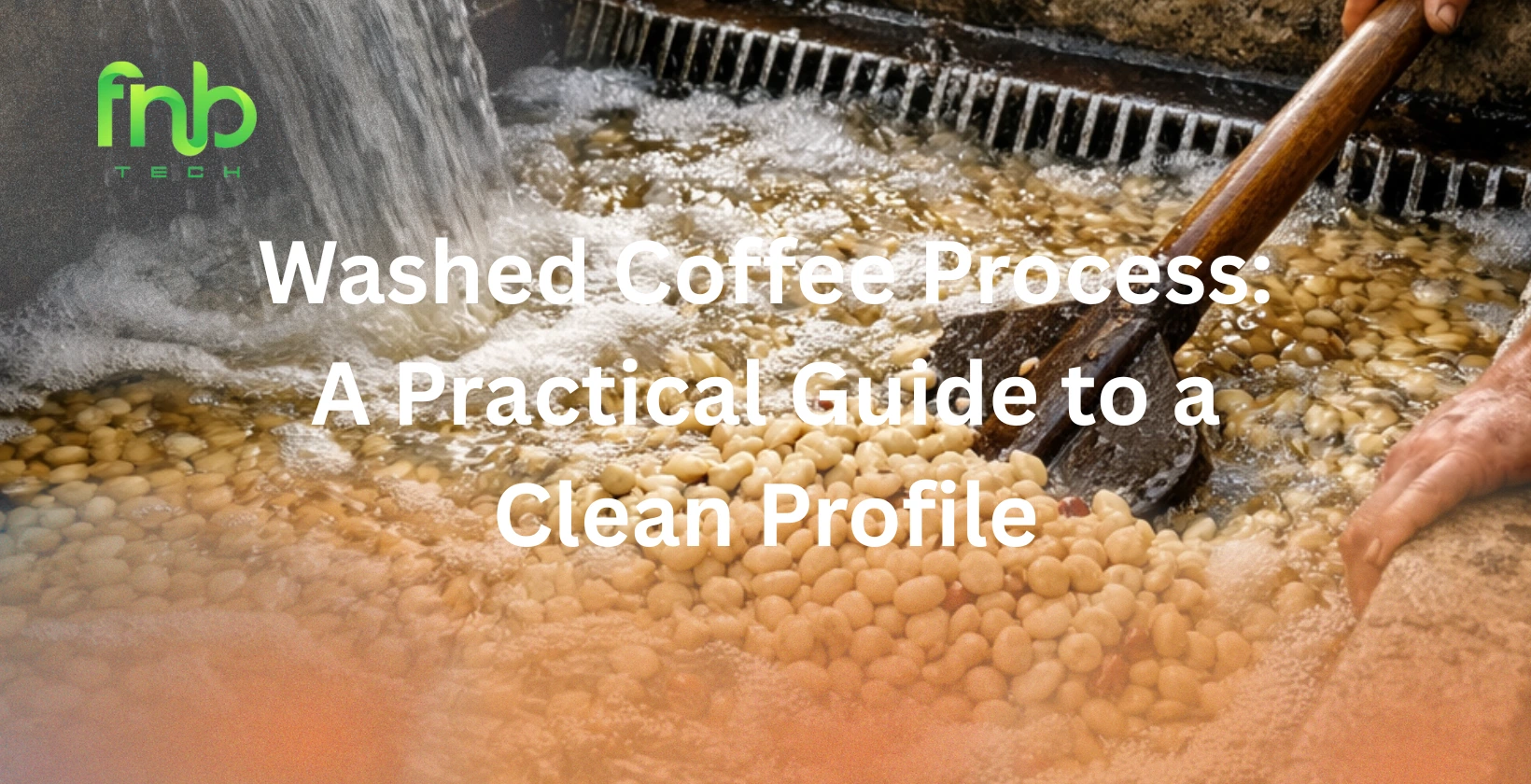
The washed coffee process, often called wet process coffee, is a post-harvest method where the coffee cherry’s fruit is removed early, and remaining mucilage is broken down through controlled fermentation and washing before drying. The goal is clarity: minimize fruit-sugar influence from drying-on-fruit, and let origin character lead.
Washed coffee process = harvest → pulp → ferment → wash → dry → mill.
- Clean cup profile and defined acidity.
- Clear separation of flavors (easier to read at the cupping table).
- Consistency across lots when processing is tightly controlled.
Washed Coffee Process: Step-By-Step
At a wet mill, the washed process is a chain of quality decisions. Each stage has a purpose, and a failure mode.
1) Harvesting and Cherry Selection
Quality starts before water touches the coffee. Selective picking reduces mixed ripeness, which lowers the risk of uneven fermentation and “muddy” cups.
Common sorting tools for washed coffee process:
- Hand sorting at intake.
- Float tank / channel sorting (density separation).
2) Depulping or Skin Removal)
Cherries are depulped to remove the outer skin and pulp, leaving parchment coffee coated in sticky mucilage.
3) Coffee Fermentation or Mucilage Breakdown
This is where the washed coffee process earns its reputation. Producers ferment in tanks so microorganisms and enzymes break down mucilage. Typical fermentation runs 12–48 hours, depending on temperature, altitude, and tank conditions.
4) Washing and Channel Grading
After fermentation, parchment is washed to remove remaining mucilage. Many mills also use water channels to further separate coffee by density, often improving uniformity for roasting.
5) Drying to Stable Moisture for Storage)
Drying finishes the job: stabilize the seed for storage and export. Washed coffees are commonly patio- or bed-dried, then finished mechanically when needed. Typical washed drying averages about 8–12 days, but climate and layer depth change everything.
Process Control Table: Key Stages, Targets, and Risk
| Washed coffee process stage | Primary goal | Typical range (guideline) | Biggest risk if unmanaged |
|---|---|---|---|
| Sorting (float/channel) | Remove underripes/defects | Immediate at intake | Fermentation amplifies defects |
| Depulping | Remove fruit skin/pulp | Same day as harvest | Overripe fruit smearing, mechanical damage |
| Fermentation | Break down mucilage | ~12–48 hours | Over-fermentation → sour/off notes |
| Washing | Remove remaining mucilage | Until “clean parchment” | Residual mucilage → uneven drying |
| Drying | Reach stable storage moisture | Often ~8–12 days for washed | Too fast/slow drying → quality loss |
Read Also: The Art of Coffee Production Process
What Professionals Control in the Washed Coffee Process
The phrase “washed” sounds uniform, but in practice it’s a family of approaches. The cup outcome hinges on controllable variables.
Fermentation Variables
- Time: Longer is not automatically better, ferment “until ready,” not “until the clock ends.” (12–48 hours is common.)
- Temperature & altitude: Warmer climates accelerate fermentation; high altitude often stretches timelines.
- Tank management: Clean tanks reduce contamination risk of washed coffee process and help repeatability.
- Water quality: The cleaner and more consistent the water, the more predictable the wet process coffee result tends to be.
Washed Process Variations on Spec Sheets
- Fully washed: Classic ferment + wash; maximum clarity.
- Double washed / soaked: Additional rinsing or soaking step to push cleanliness and brightness (common in some origins).
- Mechanical demucilage (“eco” setups): Less water, faster mucilage removal; can lean cleaner but different mouthfeel depending on execution.
Flavor Profile: Why the Washed Coffee Process Tastes Clean
When the fruit is removed early, you get less fruit-sugar influence during drying and more emphasis on intrinsic seed character (variety + terroir). That’s why washed coffees are a cupping staple.
Common Washed Coffee Process Descriptors:
- Citrus (lime, grapefruit), stone fruit, or crisp apple-like acidity.
- Florals (jasmine, bergamot) in high-grown lots.
- Structured sweetness (honey, caramel) without “jammy” heaviness.
- A “clean finish” that leaves distinct aftertaste layers.
Read Also: Introduction to Indonesian Green Coffee Beans
Quality and Sustainability Notes
Because the washed coffee process uses water and produces wastewater, responsible management matters.
For Sourcing Conversations, Ask Producers/Exporters About:
- Water use reduction (eco-pulpers, recirculation, mechanical demucilage).
- Wastewater treatment (settling tanks, filtration, composting pulp responsibly).
- Drying strategy (beds vs patios vs mechanical finish) and how they prevent re-wetting.
These operational details often explain why two “washed” coffees from the same region cup wildly differently.
Brewing and Roasting Tips for Washed Coffees
Washed coffees reward precision. If your goal is to showcase clarity:
Roasting (General Direction):
- Preserve acids and aromatics with controlled early roast energy.
- Avoid baking through Maillard, washed lots can turn flat fast.
- Build sweetness without smearing the finish (watch development time through washed coffee process).
Brewing (Quick Wins):
- Use slightly finer grind than a comparable natural to bring out definition.
- Consider lower extraction variance (consistent pouring, stable temperature).
- For espresso, washed coffees often shine with tighter ratios that highlight acidity and florals.
Conclusion
The washed coffee process rewards precision, stripping fruit early so origin character, acidity, and aromatics show clearly. When harvesting, fermentation, washing, and drying are controlled, you get consistent lots with a clean cup profile and excellent roast readability. It’s ideal for calibration cuppings, transparent menus, and quality-focused sourcing year-round reliability.
To deepen your understanding of wet process coffee, compare processing styles, and make smarter green coffee decisions, explore more resources on FNB Tech. Read their articles on fermentation, drying, and origin-specific practices, then apply those insights to your next menu or roast plan. Visit FNB Tech today for specialty coffee.
FAQ
What’s the difference between washed coffee process and natural process?
The washed coffee process removes fruit early and ferments to clean off mucilage before drying, creating a cleaner cup profile. Natural process dries the seed inside the fruit, increasing fruit-driven sweetness and heavier body.
How long does coffee fermentation take in wet process coffee?
A common range is 12–48 hours, but it depends heavily on temperature, altitude, and tank conditions.
Why do washed coffees often taste brighter?
Removing the fruit and mucilage early reduces fruit-sugar influence during drying, so acidity and origin character present more clearly, often described as “clean.”
Does the washed coffee process always mean “higher quality”?
Not automatically. Washed processing can improve consistency, but poor cherry selection, dirty tanks, or rushed drying can still create defects.
How long does drying take for washed coffees?
Drying varies by climate and method, but one industry reference puts washed drying around 8–12 days on average, with strong dependence on conditions and handling.

I’m Tania Putri, a passionate content writer who truly loves coffee and the stories behind every cup. For me, writing isn’t just about words it’s about creating connection. I specialize in SEO-friendly content that feels natural, human, and engaging, especially in the world of specialty coffee.
I enjoy exploring everything from origin stories and flavor notes to pricing insights and global coffee trends. Whether I’m writing about rare kopi luwak or Ethiopian heirloom beans, I always aim to blend strategy with warmth. Coffee inspires me, and through my writing, I love sharing that passion with others.
Tags: clean cup coffee coffee fermentation process coffee processing methods coffee processing techniques coffee pulped washed method coffee washing process green coffee processing specialty coffee processing washed arabica coffee washed coffee beans washed coffee flavor profile washed coffee method washed coffee process wet process coffee wet processed coffee