

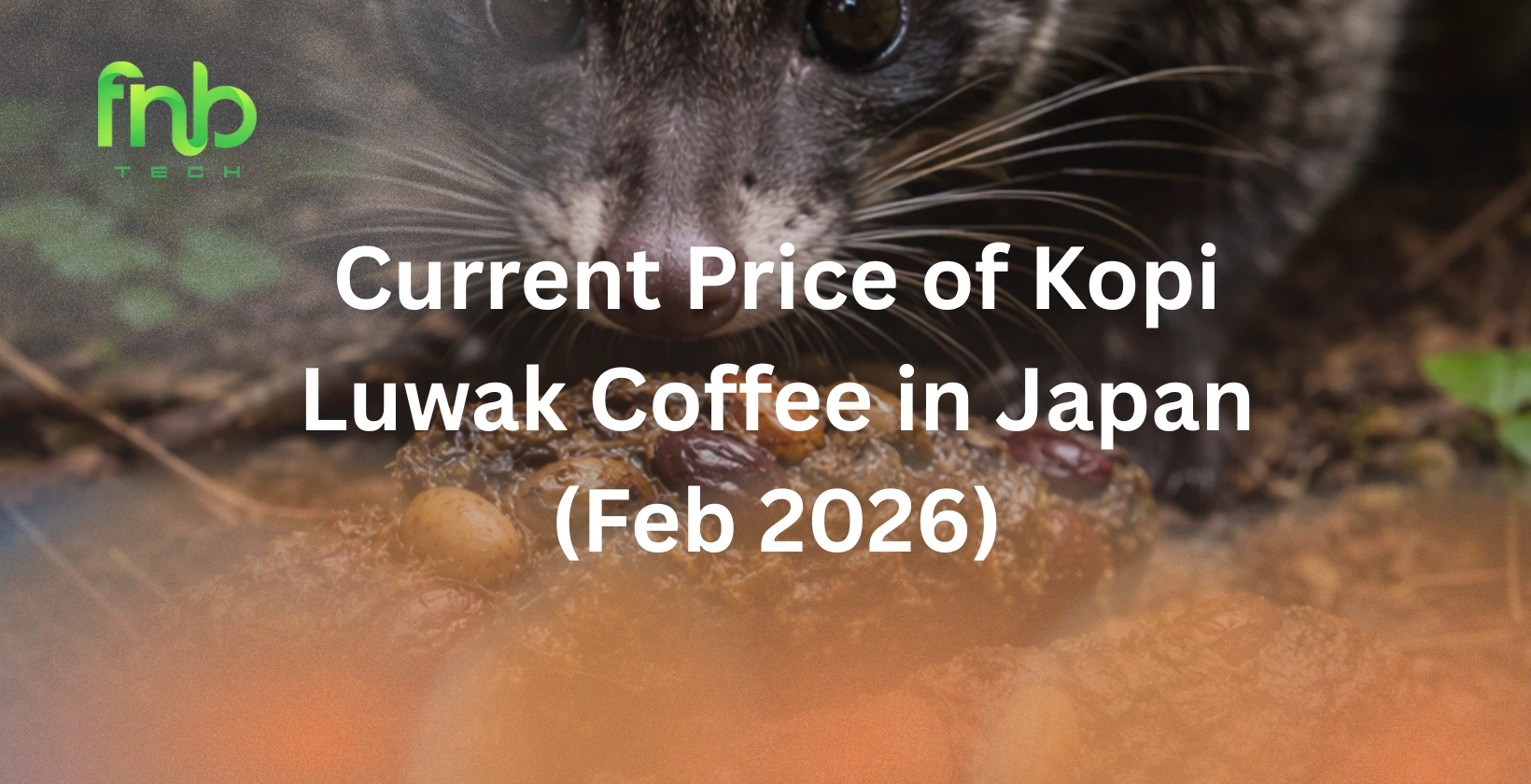

Current Price of Kopi Luwak Coffee in Japan (Feb 2026)
In Japan, Kopi Luwak (civet coffee) sits in the “luxury gift” corner of the specialty market, so pricing is driven more by scarcity, packaging, and import costs than by everyday cafe demand. As of February 2026, common Japanese retail listings for 100 g bags cluster in the mid-thousands of yen, with many products sold through marketplace-style storefronts rather than mainstream roasters. If you are tracking the price of kopi luwak coffee, the first rule is to compare the same format (whole beans vs powder, roasted vs green, single bag vs bundle) and then convert everything to a per-kilogram figure before deciding what is expensive civet coffee.
Because Japan often sells Kopi Luwak in small packs (50–100 g) and premium bundles, the per-kilogram math can look extreme. However, those retail numbers do not necessarily reflect farm-gate or export pricing. This guide summarizes February 2026 Japan listings and also adds benchmark prices from Indonesian export catalogs so you can understand what is driving the price of kopi luwak coffee in Japan.
Contents
Current Price of Kopi Luwak Coffee in Japan (Roasted Coffee, Feb 2026)
Approximate JPY/kg is calculated from the listed package size. For most Japan shoppers, this table gives the clearest view of the retail price of kopi luwak coffee because it converts real storefront prices into a comparable per-kilogram figure.
Retail Listings (Japan)!
| Format & Source | Package Size | Price (JPY) | Approx. JPY per kg | Notes |
|---|---|---|---|---|
| Roasted beans (Yahoo! Shopping / Beans510) | 100 g | ¥7,700 | ~¥77,000/kg | Roast level selectable; small-batch roasted |
| Roasted beans (Rakuten Marketplace) | 100 g | ¥5,800 | ~¥58,000/kg | Gift-oriented listing; often free shipping |
| Roasted beans (Rakuten / Beans510) | 100 g | ¥7,000 | ~¥70,000/kg | Marketed as “rare coffee” |
| Ground coffee (Rakuten Marketplace) | 100 g | ¥6,100 | ~¥61,000/kg | Convenience format, still premium priced |
| Bundle set (ANA Mall / THYMUS COFFEE) | 130 g total | ¥11,990 | ~¥92,231/kg | Includes beans + drip packs |
| Blend product (ANA Mall / Travel Sommelier Coffee) | 200 g | ¥5,000 | ~¥25,000/kg | Blend, not 100% Kopi Luwak |
| Roasted beans (Amazon Japan) | 50 g | ¥3,980 | ~¥79,600/kg | Small pack inflates per-kg price |
The main pattern in February 2026 is “small-pack retail.” When 50–100 g dominates, the per-kilogram price of kopi luwak coffee rises sharply, even before adding gift boxes or premium shipping. This does not mean the underlying green coffee costs the same.
Green (Unroasted) Kopi Luwak Prices vs Japan Retail
Green beans are cheaper because buyers are not paying for retail roasting, packaging, or gift presentation. For anyone trying to understand the price of kopi luwak coffee, green-bean benchmarks help separate raw coffee value from retail markup.
Export and Catalog Benchmarks:
| Source | Product Type | Price Shown | Notes |
|---|---|---|---|
| SpecialtyCoffee.id price list | Green Kopi Luwak beans | $50/kg | Business-buyer pricing |
| FnB Tech catalog | Green / roasted / powder | $65–$94/kg | Minimum order; quarantine fee for green beans |
| FnB Coffee catalog | Green / roasted / powder | $50–$94/kg | Price varies by format |
| KopiLuwak.coffee | Aceh Gayo / Toraja / Java | From $35/kg | Entry-tier pricing; shipping may apply |
| KopiLuwak.coffee | Bali Kintamani | From $89/kg | Higher starting tier |
These figures explain why Japan shelves can feel disconnected from origin pricing. When green coffee trades in the double-digit USD/kg range but Japan sells 100 g for ¥5,800–¥7,700, the difference is primarily retail structure. In practice, Japan’s price of kopi luwak coffee reflects packaging, positioning, and channel costs as much as farming.
Benchmark Retail Price of Kopi Luwak Coffee Outside Japan
SpecialtyCoffee.id publishes both green-bean pricing and direct-purchase roasted pricing, providing a useful comparison point outside Japan’s gift-market context.
- Roasted Kopi Luwak coffee beans: $77.40–$79.40 per kg
- Green Kopi Luwak coffee beans: $50 per kg
Compared with Japan storefronts, these prices highlight how much per-kg inflation comes from small packs, branding, logistics, and retail commissions rather than from raw coffee cost alone.
Why Japan Retail Prices Look High in 2026
Several factors push Japan prices upward:
- Small pack sizes (50–100 g) raise per-kg figures.
- Gift culture and premium bundles add non-coffee value.
- Import compliance and conservative inventory increase costs.
- Marketplace commissions are built into retail pricing.
- High prices are used as authenticity signals.
- Limited retail availability makes products behave like collectibles.
Together, these factors explain the wide gap in the price of kopi luwak coffee between simple retail bags and curated gift sets.
Ethics, Authenticity, and Smarter Buying in Japan
Kopi Luwak carries long-standing animal welfare concerns, especially when production involves caged civets. A high price of kopi luwak coffee only makes sense if sellers can explain sourcing, collection methods, and verification.
Before buying, verify:
- Clear origin and traceability
- Detailed ethics claims (not just buzzwords)
- Recent roast dates
- Clear format labeling (beans, powder, or blend)
- Realistic pricing that avoids both extremes
Conclusion
In February 2026, Japan primarily sells Kopi Luwak as premium 50–100 g retail packs or gift bundles, pushing per-kilogram equivalents to very high yen levels. At the same time, export and supplier catalogs show far lower pricing for green and bulk formats. This confirms that Japan’s price of kopi luwak coffee is shaped mainly by packaging, retail structure, and gift positioning.
To buy confidently, always compare like-for-like formats, convert prices to per-kilogram terms, and demand traceability. Done correctly, you can decide whether a product is a fair luxury purchase, a collectible gift, or simply overpriced. Buy Kopi Luwak through FNB Tech to access clearly specified formats, transparent per-kilogram pricing, and documented traceability. When you compare like-for-like and purchase from a supplier that explains origin and handling.

I’m Tania Putri, a passionate content writer who truly loves coffee and the stories behind every cup. For me, writing isn’t just about words it’s about creating connection. I specialize in SEO-friendly content that feels natural, human, and engaging, especially in the world of specialty coffee.
I enjoy exploring everything from origin stories and flavor notes to pricing insights and global coffee trends. Whether I’m writing about rare kopi luwak or Ethiopian heirloom beans, I always aim to blend strategy with warmth. Coffee inspires me, and through my writing, I love sharing that passion with others.
Tags: authentic kopi luwak price buy kopi luwak coffee price ethical kopi luwak price expensive kopi luwak coffee how much is kopi luwak coffee kopi luwak beans price kopi luwak coffee beans cost kopi luwak coffee cost kopi luwak coffee price kopi luwak coffee price indonesia kopi luwak price per kg kopi luwak retail price kopi luwak wholesale price price of kopi luwak coffee real kopi luwak coffee price