

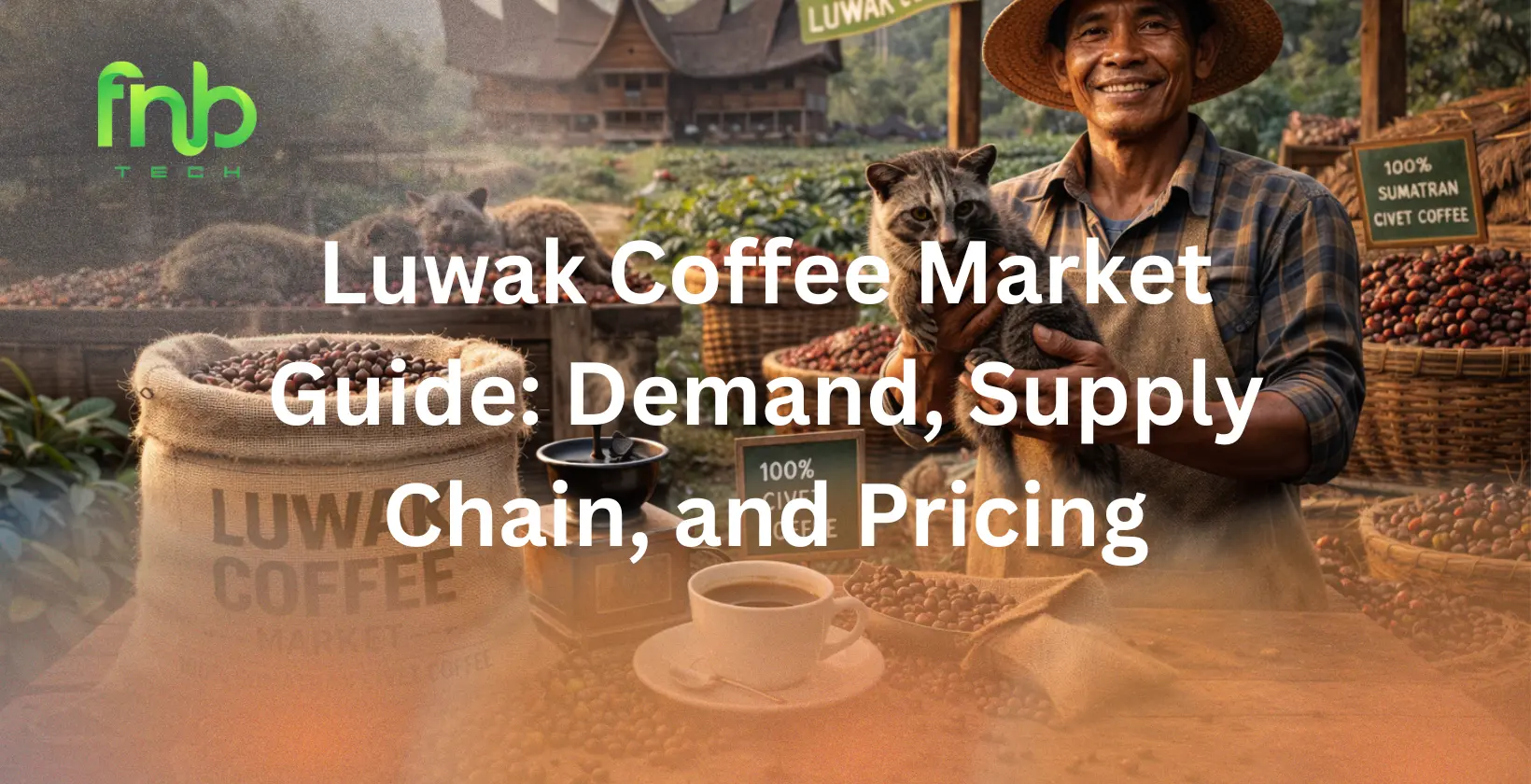

Luwak Coffee Market Guide: Demand, Supply Chain, and Pricing
The Luwak coffee market serves a small, premium niche within specialty coffee. It centers on kopi luwak, which uses beans that collectors recover after civet digestion. For that reason, market analysis must focus on authenticity, ethics, and trade controls. This article explains structure, demand forces, supply routes, and pricing dynamics. It targets readers who need clear, market-based definitions and comparisons.
Today, the Luwak coffee market faces scrutiny alongside steady luxury positioning. Still, sellers still target gifting, tourism retail, and online specialty channels. In addition, exporters manage compliance, labeling claims, and import documentation. Meanwhile, buyers compare taste claims with verifiable sourcing information. As a result, market outcomes depend on trust signals and supply discipline.
Contents
What Is the Luwak Coffee Market?
The Luwak coffee market refers to trade and pricing for kopi luwak products. Producers collect beans from civet droppings or controlled feeding systems. They then wash, dry, sort, and roast beans for retail or export sales. Consequently, the market spans farms, processors, traders, and specialty retailers. It also includes testing services that verify species, origin, and processing steps.
Within the Luwak coffee market, product quality depends on handling and traceability. Collectors must prevent mold, contamination, and mixing with standard arabica lots. Roasters must control defects, roast consistency, and packaging oxygen exposure. So, buyers often demand documentation, lot codes, and independent lab checks. Those controls reduce fraud risk and support repeatable cup profiles.
Global Demand Trends in the Luwak Coffee Market
Demand in the Luwak coffee market stays limited but remains visible worldwide. It concentrates in premium gifting, travel retail, and novelty-driven specialty segments. For that reason, demand analysis matters because small shifts change prices quickly. Moreover, thin supply and high fraud risk amplify demand signals. Analysts track demand to guide sourcing contracts, inventory, and compliance planning.
Demand analysis also matters in the Luwak coffee market because ethics shapes willingness. Buyers compare sensory claims with welfare claims and third-party verification. In addition, online search behavior influences discovery and price anchoring. Yet, negative media can reduce demand faster than supply can adjust. For that reason, demand tracking supports risk management and brand protection.
Tourism Retail and Gifting Cycles
Tourism and gifting drive short-run demand in the Luwak coffee market. Airport shops, resort boutiques, and souvenir outlets often stock small packages. So, seasonality follows holiday travel patterns and local festival calendars. Retailers also bundle coffee with premium boxes and origin stories. Yet, travel disruptions can quickly cut this channel and raise inventories.
Luxury Branding and Novelty Value
Luxury positioning supports demand in the market through scarcity messaging. Brands emphasize rarity, hand collection, and unusual processing to justify premiums. Consequently, packaging design, certificates, and limited lots influence purchase intent. Still, novelty demand weakens when buyers question authenticity claims. Thus, brands invest in verification to protect luxury pricing power.
Online Discovery and Cross-Border Access
E-commerce expands reach for the Luwak coffee market beyond local storefronts. Marketplaces, direct-to-customer sites, and social commerce list numerous offerings. So, search results and reviews shape conversion and repeat purchasing. Yet, platform counterfeit listings can erode trust and raise refund rates. Reputable sellers use traceable lots and clear return policies.
Authenticity Testing and Documentation Needs
Verification needs restrain demand in the international market when proof stays weak. Buyers increasingly request lab tests, origin records, and custody documentation. So, sellers who provide credible evidence can win higher-value accounts. Still, testing adds cost and extends lead times for small shipments. As a result, weak documentation can push buyers toward other premium coffees.
Ethical Scrutiny and Reputational Risk
Ethical concerns restrain demand in the Luwak coffee market across major import regions. Buyers react to reports about caged civets, stress, and poor feeding practices. For that reason, retailers may delist products without welfare assurances and audits. Still, wild-collected supply can still attract buyers seeking ethical sourcing. As a result, ethics acts as both a barrier and a differentiator.
Price Sensitivity and Premium Substitutes in Luwak Coffee Market
High prices limit demand in the international market when alternatives compete. Specialty buyers compare it with micro-lot arabica, gesha, and anaerobic lots. Therefore, substitutes offer traceability and novelty with fewer ethical questions. Still, some buyers still pay for the unique category and gift signaling. Consequently, sellers must justify premiums with proof and consistent quality.
Key Production Regions and Supply Chain Structure
The Luwak coffee market relies mainly on Indonesian production and export systems. Key regions include Sumatra, Java, Bali, and Sulawesi within existing coffee belts. So, supply chains often reuse arabica and robusta infrastructure and traders. Collectors, processors, and exporters coordinate lot aggregation and documentation. This structure shapes availability, lead times, and verification options.
Supply chain design matters in the Luwak coffee market because small volumes raise logistics costs. Exporters must manage drying standards, food safety rules, and customs paperwork. In addition, roasters abroad demand stable delivery windows and consistent grading.
- Producers and collectors focus on regions with dense civet habitats and farms. They monitor collection routes, ripeness cues, and weather for safe handling. So, they schedule frequent pickups to reduce fermentation variance.
- Processors wash and dry beans quickly to control defects and microbes. They use clean water sources, drying beds, and moisture testing practices. Consequently, they reduce mold risk and protect export-grade quality.
- Sorting and grading teams remove broken beans, stones, and foreign material. They apply screens, density tables, and visual sorting to raise uniformity. So, they improve roast behavior and reduce grinder wear for users.
- Traders aggregate micro-lots from multiple villages and small processors. They manage storage, lot coding, and transaction records for each batch. In turn, they create exportable volumes that importers can purchase reliably. Clear custody records reduce fraud risk in the luwak coffee market.
- Importers and distributors route products through specialty retail channels. They supply cafes, gourmet stores, and online subscription services. Consequently, they control final pricing through margins and promotional timing.
- Certification bodies and auditors add verification layers across the chain. They review animal welfare claims, custody records, and facility practices. A mature audit process can raise market access and stabilize demand.
Ethical Concerns and Sustainability in the Luwak Coffee Market
Ethics shapes value in the Luwak coffee market because trust drives premium pricing. Buyers connect welfare, traceability, and brand risk directly to purchase decisions. For that reason, sellers must describe sourcing methods and provide verifiable evidence. Yet, weak claims can trigger delisting, refund pressure, and reputational harm. So, ethics influences demand, pricing power, and channel access.
| Dimension | Traditional sourcing practices | Certified ethical practices |
|---|---|---|
| Animal welfare approach | Suppliers may confine civets and limit natural behavior. | Programs set space, diet, and handling standards. |
| Traceability depth | Records may stop at trader level or mixed collection sites. | Systems track lots to collector groups and processors. |
| Verification method | Sellers often rely on self-declared claims and informal checks. | Third parties audit facilities and review documentation. |
| Market access | Some retailers avoid products without verified welfare assurances. | Verified programs can meet retailer sourcing policies. |
| Cost structure | Lower oversight costs may reduce near-term expenses. | Audits and training add costs but can support premiums. |
| Dimension | Traditional sourcing practices | Certified ethical practices |
|---|---|---|
| Fraud exposure | Limited testing can allow blending or mislabeling. | Testing and custody controls reduce fraud incentives. |
| Consumer information | Packaging may provide vague origin statements and broad claims. | Labels can include lot codes and audit references. |
| Supply resilience | Practices may vary widely across suppliers and seasons. | Standards reduce variance and support planning. |
| Reputation risk | Negative reporting can damage brands and downstream partners. | Transparent programs can reduce risk and improve confidence. |
| Long-term positioning | Novelty drives sales without strong governance signals. | Governance supports premium, compliant positioning. |
Pricing, Distribution, and Market Challenges
Pricing in the Luwak coffee market stays high because volumes remain scarce. Collectors and processors face higher costs for sorting and verification steps. For that reason, sellers set premiums to cover audits, testing, and small-lot logistics. In addition, distributors add margins for risk, returns, and slow inventory turns. Thus, final prices vary widely across quality grades and proof levels.
Distribution relies on specialty retailers, travel outlets, and online storefronts. Yet, counterfeit risk forces brands to invest in packaging security features. Moreover, regulators can challenge labeling claims and animal welfare statements. Sellers also face supply volatility from weather, habitat change, and farm shifts.
Conclusion
The luwak coffee market operates as a premium niche with strong trust requirements. Demand responds quickly to ethics signals, tourism cycles, and online discovery. Meanwhile, supply chains depend on disciplined collection and documented custody. For that reason, firms that invest in verification can defend margins and access. This framework helps analysts compare opportunities, risks, and channel strategies.
Future performance will depend on transparency, welfare governance, and quality control. Exporters and brands can strengthen trust through audits and lot-level traceability. In addition, distributors can reduce fraud exposure through controlled seller networks. Build trust where it matters most. Discover how FNB Tech helps Luwak coffee brands ensure traceability, ethical sourcing, and verified quality.

I’m Tania Putri, a passionate content writer who truly loves coffee and the stories behind every cup. For me, writing isn’t just about words it’s about creating connection. I specialize in SEO-friendly content that feels natural, human, and engaging, especially in the world of specialty coffee.
I enjoy exploring everything from origin stories and flavor notes to pricing insights and global coffee trends. Whether I’m writing about rare kopi luwak or Ethiopian heirloom beans, I always aim to blend strategy with warmth. Coffee inspires me, and through my writing, I love sharing that passion with others.
Tags: authentic luwak coffee buy luwak coffee indonesia civet coffee indonesia ethical luwak coffee indonesian kopi luwak kopi luwak luwak coffee luwak coffee beans luwak coffee market luwak coffee plantation market luwak coffee price premium civet coffee sumatran luwak coffee traditional luwak coffee market wild luwak coffee