

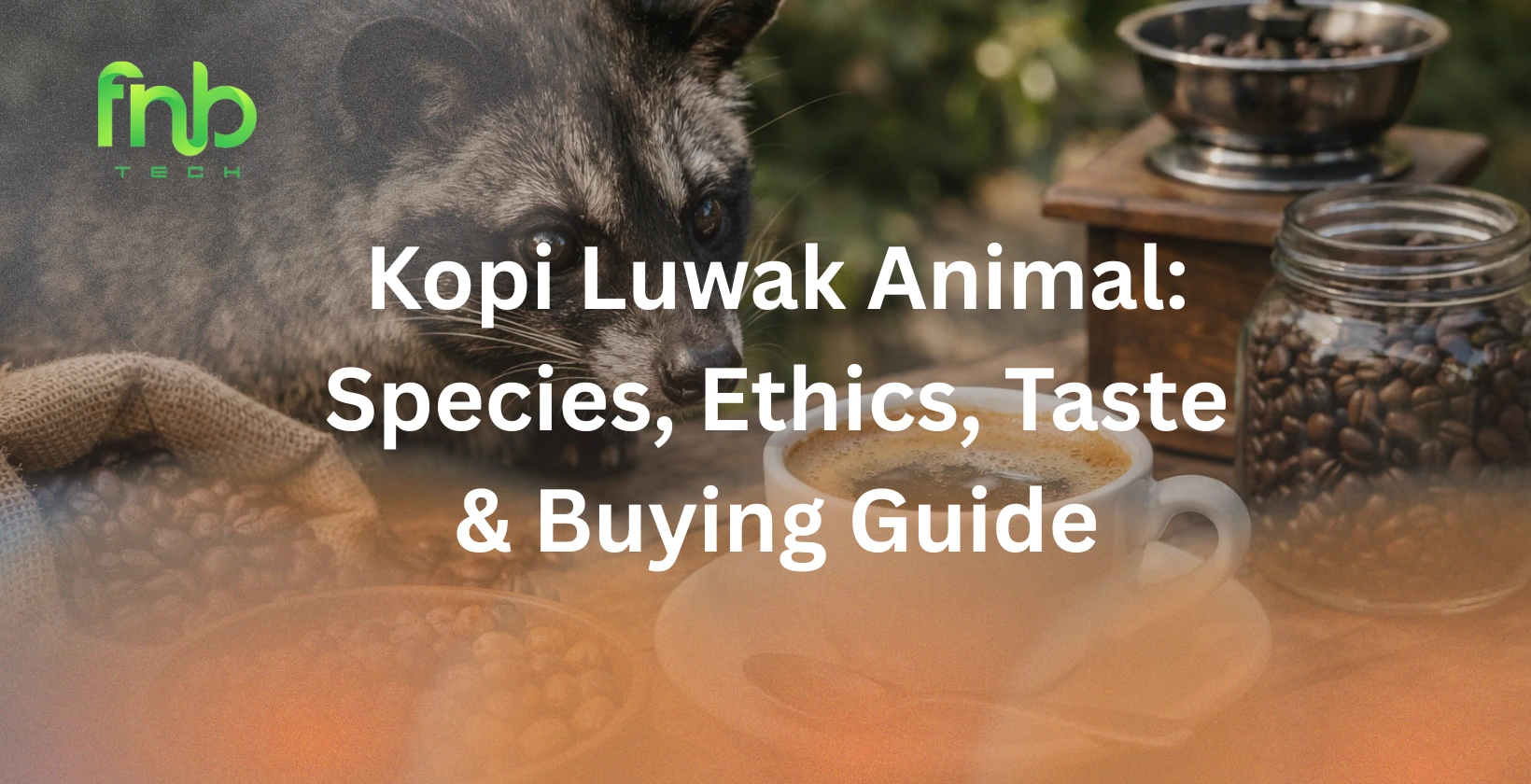

Kopi Luwak Animal: Species, Ethics, Taste & Buying Guide
The term kopi luwak animal matters because it answers the biggest question behind one of the world’s most talked-about coffees: what creature is actually involved, and why does that matter for taste, ethics, and buying decisions? Clear facts help separate novelty from quality, and marketing stories from responsible sourcing.
Contents
- 1 Key Takeaways
- 2 What Kopi Luwak Is and Why It Became Famous
- 3 Kopi Luwak Animal: Species, Habitat, and Diet
- 4 How Traditional Kopi Luwak Is Produced
- 5 Flavor Profile Claims and What Really Shapes the Cup
- 6 Kopi Luwak Animal and Ethical Sourcing
- 7 How Buyers Can Verify Authenticity and Quality
- 8 Buyer Checklist
- 9 Brewing Suggestions for the Best Cup
- 10 FAQ
- 11 Conclusion
Key Takeaways
- Kopi Luwak is made from coffee beans eaten and later excreted by a civet, not a domestic cat.
- The best-known species is the Asian palm civet, which lives across parts of Southeast Asia.
- Fame comes from rarity, unusual processing, and luxury marketing, not from guaranteed cup quality.
- Flavor is often described as smooth and low in bitterness, but origin, roast, freshness, and processing still matter most.
- Wild-sourced and caged production are very different, especially in welfare and traceability terms.
- Serious buyers look for origin details, realistic claims, and sourcing transparency before price or hype.
What Kopi Luwak Is and Why It Became Famous
Kopi Luwak is coffee produced from beans that pass through a civet’s digestive tract before being collected, cleaned, dried, and roasted. It became famous because the civet process is unusual, the supply is limited, and the story is easy for luxury sellers to market.
In coffee education, kopi luwak animal discussions often begin with that fame but should not end there. A rare process can attract attention, yet rarity alone does not guarantee a cleaner cup, better sweetness, or higher specialty quality.
Kopi Luwak Animal: Species, Habitat, and Diet
The animal behind Kopi Luwak is usually the Asian palm civet, known scientifically as Paradoxurus hermaphroditus. Civets are small, nocturnal mammals found in forest edges, plantations, and mixed agricultural landscapes across Indonesia and other parts of Southeast Asia.
The kopi luwak animal is not a cat, even though its face and body shape can cause confusion. In the wild, civets eat a varied diet that includes fruit, insects, and small animals. Coffee cherries are only one part of a broader feeding pattern when the habitat still supports natural foraging.
Table 1 — Quick Facts About the Kopi Luwak Animal
| Topic | Quick Answer |
|---|---|
| Species name | Usually the Asian palm civet (Paradoxurus hermaphroditus) |
| Habitat | Forest margins, plantations, and rural landscapes in Southeast Asia |
| Diet | Fruit, insects, small animals, and seasonal plant material |
| Behavior | Mostly nocturnal, solitary, and opportunistic in feeding |
| Role in coffee production | Eats ripe cherries; beans pass through digestion and are later collected |
Why the Kopi Luwak Animal Chooses Ripe Cherries
One traditional explanation for Kopi Luwak quality is that civets tend to select ripe fruit. In theory, that natural selection can improve raw material at the very first stage. In practice, the result from kopi luwak animal still depends heavily on origin, cleanliness, drying, and roasting after collection.
How Traditional Kopi Luwak Is Produced
Traditional production follows a simple but labor-intensive chain. The process sounds exotic, yet every later step still has to meet ordinary coffee quality standards if the final cup is expected to taste refined rather than flat or dirty.
- Coffee cherry selection in nature
Kopi luwak animal eats ripe cherries while foraging. - Digestion and fermentation
The fruit is broken down in the digestive tract, while the beans remain intact and undergo mild chemical change. - Collection and cleaning
Excreted beans are gathered, washed thoroughly, and sorted. - Drying, hulling, and roasting
The coffee is dried, hulled where needed, graded, and roasted like other premium lots.
During production, the kopi luwak animal is only one part of the story. Collection hygiene, defect sorting, moisture control, and roast development all shape whether the coffee tastes smooth and clean or merely unusual.
Flavor Profile Claims and What Really Shapes the Cup
Kopi Luwak is often described as full-bodied, soft in acidity, and lower in perceived bitterness. Aroma descriptions commonly include earthiness, chocolate, wood, mild spice, and a rounded finish. Those claims are not always wrong, but they are sometimes overstated.
The final cup depends more on fundamentals than romance. In professional tasting terms, kopi luwak animal processing may influence texture and perceived smoothness, but origin, altitude, variety, roast level, freshness, and post-harvest handling still carry enormous weight.
Kopi Luwak Animal and Ethical Sourcing
Ethics are central to modern Kopi Luwak evaluation. The major distinction is between wild-sourced collection and caged or farmed production. Wild-sourced coffee refers to beans collected from civet droppings found in natural or semi-natural environments, while caged production involves keeping civets confined for output.
For many buyers, kopi luwak animal welfare is the defining issue. Confinement can raise concerns about stress, poor diet, limited movement, and weak oversight. Responsible sellers should explain sourcing clearly instead of relying on vague phrases such as “authentic” or “traditional” without evidence.
Table 2 — Wild-Sourced vs. Farmed Kopi Luwak Animal
| Category | Wild-Sourced | Farmed/Caged | What Buyers Should Look For |
|---|---|---|---|
| Animal conditions | Free-ranging in natural habitat | Confined or controlled | Clear sourcing explanation, not generic claims |
| Cherry selection | Opportunistic natural feeding | Often human-managed feeding | Evidence of genuine collection methods |
| Welfare concern | Lower when verified responsibly | Higher risk of stress and poor care | Welfare statements backed by detail |
| Traceability | Can be harder but still possible | Often marketed heavily without proof | Region, collector, and lot information |
| Buyer confidence | Stronger when transparent | Weaker when story is exaggerated | Independent verification where available |
How Buyers Can Verify Authenticity and Quality
Authenticity begins with traceability. Reliable sellers should provide region, collection method, roast date, and practical processing details. In specialty coffee, vague luxury language is never a substitute for origin information and honest lot description.
The most trustworthy kopi luwak animal offerings are usually presented with modest, checkable claims. Sellers that focus only on celebrity status, shock value, or extravagant promises often leave important quality questions unanswered.
Table 3 — Authenticity & Quality Checklist
| Checkpoint | Why It Matters | What to Look For | Red Flags |
|---|---|---|---|
| Traceability | Supports authenticity and repeatability | Region, collector, lot details | No origin beyond “premium” |
| Roast freshness | Preserves aroma and flavor clarity | Recent roast date | No roast date shown |
| Welfare claims | Helps assess ethics | Clear anti-caging statement with details | Emotional language without proof |
| Processing notes | Explains cup expectations | Clear cleaning, drying, and handling notes | Mystery process story |
| Marketing language | Reveals seriousness of seller | Balanced, factual descriptions | Overblown luxury claims |
| Certification or verification | Adds outside credibility where applicable | Third-party review or transparent documentation | Claims of proof with nothing to examine |
Buyer Checklist
This short checklist can help readers evaluate sellers quickly before making a decision.
- Confirm the origin region and collection story.
- Check for a visible roast date.
- Look for clear welfare language and anti-caging detail.
- Prefer sellers that describe flavor realistically.
- Be cautious with unusually cheap offers. Always check a reliable price.
- Treat mystery branding as a serious warning.
For practical buying decisions, kopi luwak animal claims should always be matched with real information. A transparent seller makes the coffee easier to judge on quality, ethics, and value rather than on novelty alone.
Brewing Suggestions for the Best Cup
Careful brewing matters because rare coffee can still taste disappointing if the grind is off or the water is too hot. Fresh grinding, stable water temperature, and a balanced ratio usually reveal the coffee more honestly than overly aggressive extraction.
A pour-over method works well for showing body and aroma without making the cup muddy. French press is another strong option for drinkers who prefer a rounder texture and deeper mouthfeel. In both methods, the kopi luwak animal story should not distract from basic brewing discipline.
A practical starting point includes:
- Medium grind for pour-over
- Coarser grind for French press
- Water just off the boil, roughly in the low-to-mid ninety-degree Celsius range
- A moderate brew ratio around one part coffee to fifteen or sixteen parts water
- Fresh beans stored in an airtight, opaque container away from heat and moisture
FAQ
Is Kopi Luwak always made from civets?
Usually, yes. The best-known and most widely referenced production involves civets, especially the Asian palm civet, rather than domestic cats or other animals.
Does digestion automatically improve coffee flavor?
Not automatically. Digestion may influence smoothness and perceived bitterness, but cup quality still depends on origin, processing cleanliness, roasting skill, and freshness.
How can responsible sourcing of kopi luwak animal be recognized?
Responsible sourcing is more likely when sellers provide region details, collection information, welfare statements, and realistic flavor descriptions rather than dramatic claims.
Is Kopi Luwak better than other specialty coffees?
Not necessarily. Some drinkers value the rarity and story, while others prefer the clarity and consistency of washed, natural, or honey-processed specialty coffees from transparent producers.
Conclusion
Kopi Luwak is best understood through species facts, processing steps, cup quality, and sourcing transparency rather than novelty alone. When buyers examine flavor claims alongside welfare and traceability, the kopi luwak animal becomes easier to place in context: a real part of production, but never the only measure of authenticity, ethics, or coffee worth.
Readers interested in buying luwak coffee can explore options on FNB Tech and compare sourcing details carefully before choosing a bag. The strongest listings should explain origin, roast freshness, and welfare standards in plain language. That kind of transparency helps serious buyers judge whether the coffee deserves attention, trust, and a place in a brewing routine.

I’m Tania Putri, a passionate content writer who truly loves coffee and the stories behind every cup. For me, writing isn’t just about words it’s about creating connection. I specialize in SEO-friendly content that feels natural, human, and engaging, especially in the world of specialty coffee.
I enjoy exploring everything from origin stories and flavor notes to pricing insights and global coffee trends. Whether I’m writing about rare kopi luwak or Ethiopian heirloom beans, I always aim to blend strategy with warmth. Coffee inspires me, and through my writing, I love sharing that passion with others.
Tags: animal poop coffee civet animal that makes kopi luwak asian palm civet coffee civet cat coffee civet coffee animal civet digestion coffee beans civet processed coffee beans coffee from civet animal indonesian civet coffee kopi luwak animal kopi luwak animal origin kopi luwak animal process kopi luwak civet kopi luwak civet cat kopi luwak production animal wild civet kopi luwak