

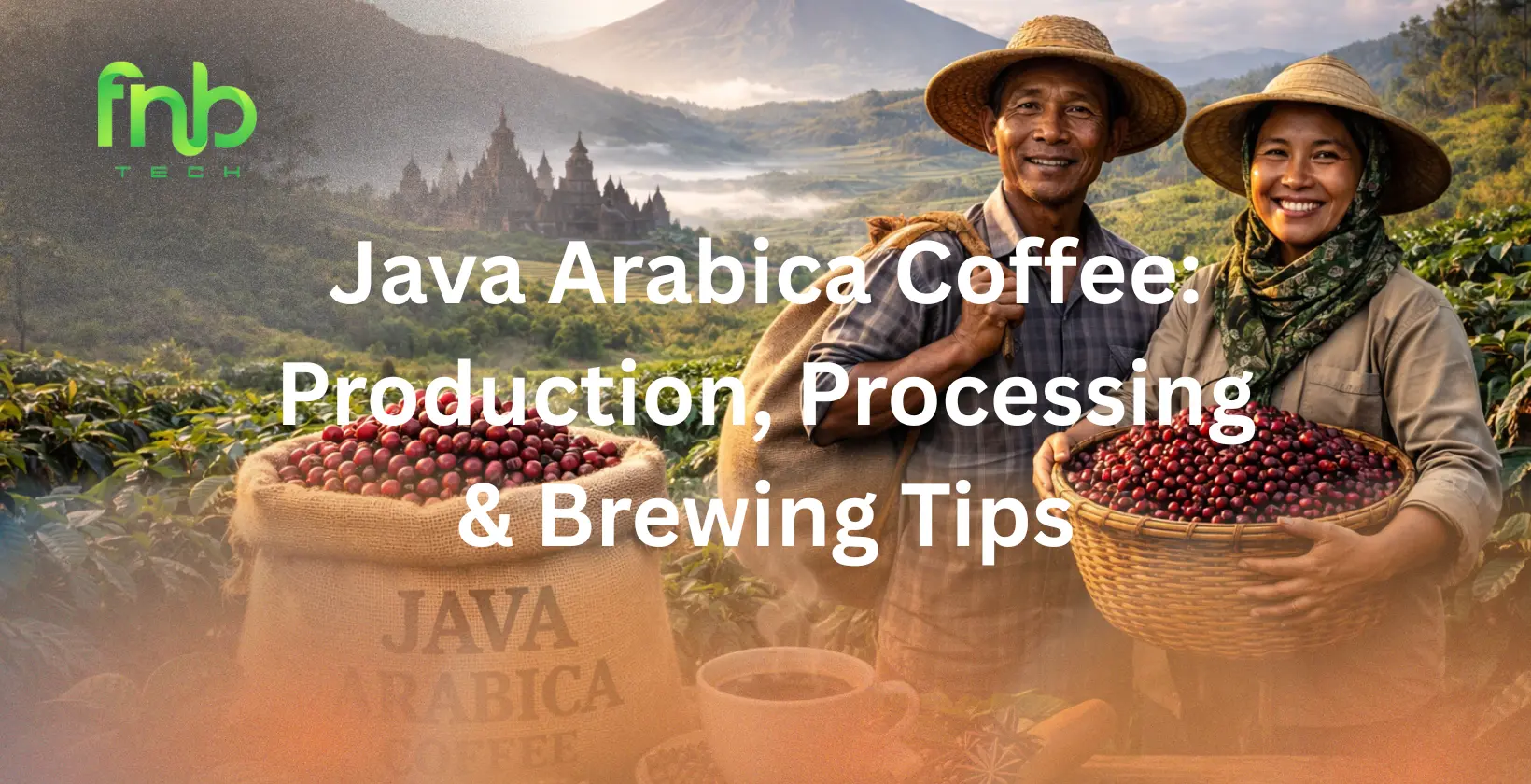

Java Arabica Coffee: Production, Processing & Brewing Tips
Java arabica coffee offers a clear example of Indonesian Arabica from a single island. It comes from coffee beans that farmers cultivate in Java’s volcanic highlands. Therefore, buyers often link it with steady supply and consistent grading. This article explains origin, processing method, roast level, and brewing methods with clarity.
For search labels, java arabica coffee often signals estate lots from Java. It differs from generic “Java coffee,” which can include other coffee beans. Moreover, sellers may blend it with other Arabica variety lots for balance. Clear definitions help buyers compare flavor profile, cupping notes, and freshness across brands. This phrasing also aids clear SEO indexing.
Contents
What Is Java Arabica Coffee?
The trade term java arabica coffee describes Arabica beans from Indonesia’s Java island. Farmers grow these coffee beans from Arabica variety cultivars suited to humid mountains. In addition, exporters grade lots by screen size, defect count, and moisture. These steps help roasters predict extraction and manage roast level decisions. It also guides importers during lot selection.
On Java, java arabica coffee often comes from estates and smallholder groups. Thus, supply chains often document altitude, harvest window, and processing method details. Roasters then match those details with target body and acidity outcomes. Clear labeling also supports better grind size choices during home preparation. These details reduce confusion between regions and product names.
Where Does Java Arabica Come From?
java arabica coffee comes from farms on Indonesia’s Java island, mainly in upland zones. Producers focus on volcanic soils and cooler nights to build bean density. As a result, lots often show steady solubility during brewing and consistent cupping notes. Regional names may include Ijen, Malang, Priangan, and other local districts.
Altitude shapes java arabica through slower ripening and higher bean density. Therefore, farmers often plant on slopes between roughly 900 and 1,600 meters. Cooler air slows cherry ripening and supports sugar development in seeds. This origin context helps buyers compare aroma, acidity, and body across origins. Higher density often supports slower roasting and better structure.
How Processing Shapes Java Arabica Coffee Quality
Processing choices shape java arabica coffee quality by controlling fermentation, drying, and defect risk. Producers select washed, honey, or natural styles based on climate and infrastructure. Consequently, each method changes clarity, sweetness, and aftertaste in predictable ways. Quality control also links processing with moisture targets and stable storage. Each choice also affects defect rates during export.
Well-managed processing also protects java arabica coffee freshness during shipping and roasting. Producers track water quality, fermentation time, and drying pace for consistency. Thus, exporters can offer lots with repeatable cupping notes across harvests. Roasters then adjust roast level to highlight sweetness without baking flavors. Stable moisture limits staling during long freight routes.
- Manage drying speed to limit mold growth and preserve clean aromatics. They use raised beds or patios with regular turning cycles. Therefore, a controlled schedule reduces uneven moisture and prevents harsh woody notes. A producer can target 10–12 percent moisture for stable storage and transport. Regular airflow also prevents case hardening on the surface.
- Sort cherries and parchment to remove defects before milling. They use flotation, hand sorting, and density tables for better separation. Consequently, fewer quakers and insect-damaged beans reach the roaster. This step supports higher clarity in the cup and steadier extraction across brew batches. Careful sorting also reduces bitterness from broken beans.
- Measure moisture in java arabica coffee parchment to protect storage quality. They use calibrated meters and track readings across drying days. Therefore, lots avoid staling risks from excess moisture and oxidation. Better moisture control also reduces brittle beans that roast unevenly. Producers also seal bags to block humidity swings.
- Control fermentation by monitoring temperature, time, and cleanliness. They clean tanks, refresh water, and limit overripe fruit in batches. As a result, ferment flavors stay subtle and support balanced acidity. Controlled fermentation also reduces vinegar notes that lower cup scores. Good sanitation also reduces bacterial growth during warm weather.
Flavor Profile and Aroma of Java Arabica Coffee
java arabica coffee often shows a balanced flavor profile shaped by origin and altitude. Higher altitude slows cherry development and increases seed density in many lots. Thus, brewers often notice steady sweetness with moderate acidity and medium body. Origin also influences cupping notes through soil minerals, rainfall patterns, and harvest timing.
Aroma and flavor in java arabica coffee also reflect processing method and roast level choices. Washed lots often emphasize clarity and defined notes in the cup. Meanwhile, honey and natural lots often push fruit tones and heavier body. The tables below summarize typical results that tasters report in controlled cupping.
Table 1. Typical notes by processing method
| Processing method | Clarity | Body | Acidity | Common notes |
|---|---|---|---|---|
| Washed | High | Medium | Medium | cocoa, citrus, gentle spice |
| Honey | Medium | Medium-high | Medium | caramel, dried fruit, soft floral |
| Natural | Medium-low | High | Low-medium | berry, chocolate, fermented fruit |
Table 2. Typical notes by roast level
| Roast level | Clarity | Body | Acidity | Common notes |
|---|---|---|---|---|
| Light | High | Medium | Medium-high | citrus, tea-like, light cocoa |
| Medium | Medium-high | Medium | Medium | caramel, cocoa, nut, mild spice |
| Dark | Medium | High | Low | dark chocolate, toast, smoky cedar |
Best Brewing Methods for Java Arabica
Brewing method changes taste because it changes extraction speed and filter contact. java arabica coffee can show different acidity and body across brewing devices. Therefore, a brewer should match grind size and ratio with the desired cup style. Water temperature and brew time then refine clarity and aroma. Small changes in dose and time shift balance quickly.
Different brewers also change agitation, pressure, and dilution during extraction. Consequently, the same roast level can taste sharp in one method. It can taste round and heavy in another method. The sections below explain practical setups and expected changes in clarity, body, and acidity. A brewer should also measure total dissolved solids when possible.
Pour-over dripper
A pour-over highlights clarity by using a paper filter and steady flow control. It also reduces body because the filter traps oils and fines. Therefore, acidity in Java arabica coffee often tastes brighter and more defined in lighter roasts. A brewer can start with a 1:16 ratio and medium grind size. A gooseneck kettle improves flow control and repeatability.
Flat-bottom batch brewer
A batch brewer supports clean cups through even bed depth and stable water delivery. It maintains moderate body while keeping clear separation between notes. Consequently, acidity stays balanced and avoids sharp edges from uneven pouring. A brewer can use a 1:17 ratio and medium grind with 92–96°C water.
French press
A French press boosts body because metal filtration keeps more oils and fines. It lowers clarity, yet it can strengthen chocolate and spice notes. Thus, acidity in Java arabica coffee often feels softer, especially with medium or dark roasts. A brewer can use a 1:15 ratio and coarse grind around 800–1,000 microns.
AeroPress
An AeroPress balances clarity and body through short immersion and optional paper filters. It can raise sweetness by increasing extraction with gentle pressure. Consequently, acidity stays present yet smooth when the brewer controls steep time. A brewer can use a 1:13 ratio and medium-fine grind with 90°C water.
Espresso
Espresso concentrates java arabica coffee flavors through high pressure and fine grinding. It delivers heavy body and lower perceived acidity from strong concentration. Moreover, clarity depends on grind precision and shot time control. A barista can target a 1:2 brew ratio with 25–30 seconds extraction. A fine adjustment can sharpen clarity without raising acidity.
Cold brew
Cold brew reduces acidity because cold water extracts fewer organic acids. It also increases body through long contact time and higher dissolved solids. Consequently, clarity drops, yet chocolate and nut notes often dominate. A brewer can steep a 1:8 ratio with coarse grind for 12–18 hours. Paper filtration after steeping improves clarity and reduces grit.
How to Buy, Store, and Grind Java Arabica Coffee
Quality buying starts with clear labels for java arabica coffee that state origin and processing. Buyers can check harvest date, roast date, and packaging valve presence. Therefore, freshness becomes easier to manage from shipment to brew. Clear labels also support matching roast level with preferred acidity and body. A reputable seller also discloses storage conditions before shipping.
Storage and grinding practices also protect java arabica coffee from staling and uneven extraction. Buyers can store sealed bags away from heat, light, and strong odors. Consequently, aromatics stay stable and the flavor profile remains consistent. A grinder with burrs supports repeatable grind size for each brewing method. Single-dose grinding also limits oxygen exposure between brews.
Conclusion
java arabica coffee offers a traceable Java island origin with predictable processing patterns. It often delivers balanced sweetness, medium body, and moderate acidity with clean notes. Therefore, roasters can adapt roast level to highlight cocoa, spice, or fruit. Buyers can then match brewing methods with desired clarity and strength. This consistency supports menu planning for cafes and roasters.
For consistent results, java arabica coffee rewards careful freshness control and measured brewing. It benefits from precise grind size, stable water temperature, and consistent ratios. Consequently, the cup shows clearer cupping notes and fewer harsh defects. This approach supports reliable comparisons across lots, roasters, and processing method styles. A simple logbook supports repeatable results across changing weather.
Want repeatable results every time? Use FNB Tech’s brewing and logging tools to control freshness, dial in ratios, and track variables, so every cup of Java Arabica stays clean, consistent, and comparable.

I’m Tania Putri, a passionate content writer who truly loves coffee and the stories behind every cup. For me, writing isn’t just about words it’s about creating connection. I specialize in SEO-friendly content that feels natural, human, and engaging, especially in the world of specialty coffee.
I enjoy exploring everything from origin stories and flavor notes to pricing insights and global coffee trends. Whether I’m writing about rare kopi luwak or Ethiopian heirloom beans, I always aim to blend strategy with warmth. Coffee inspires me, and through my writing, I love sharing that passion with others.
Tags: arabica coffee java island indonesian arabica coffee indonesian coffee arabica java arabica beans java arabica coffee java arabica coffee farmers java arabica coffee origin java arabica flavor profile java arabica green beans java arabica roast java arabica specialty coffee java coffee arabica java coffee beans premium java arabica single origin java coffee