

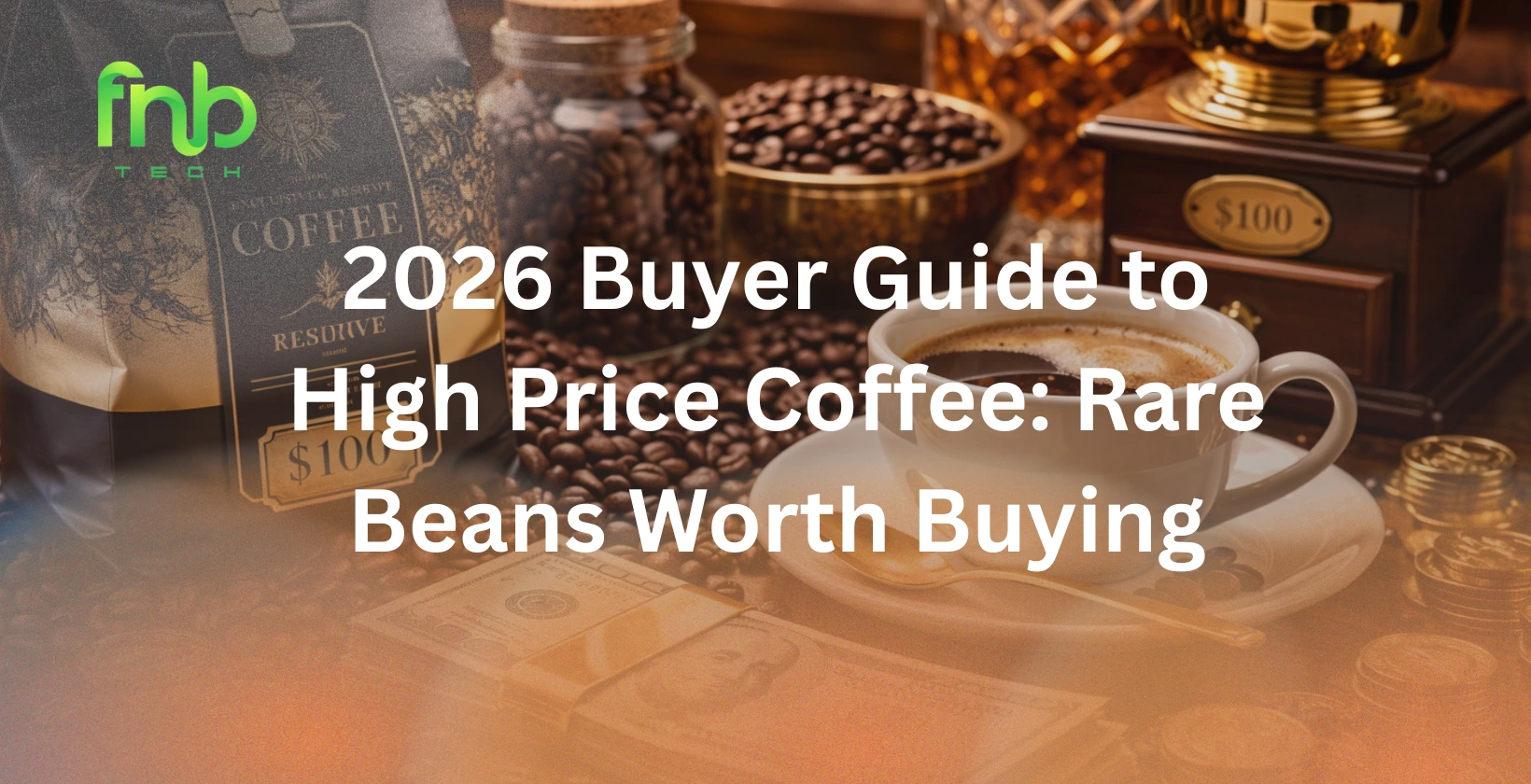

2026 Buyer Guide to High Price Coffee: Rare Beans Worth Buying
Serious buyers still pay attention to premium lots because costlier coffee can strengthen menu positioning, retail value, and brand perception when quality is repeatable. In that context, high price coffee only makes sense when the premium is attached to measurable value rather than a dramatic story.
Contents
- 1 What Makes Coffee Expensive in 2026
- 2 Why Buyers Still Choose Premium Coffee
- 3 How to Evaluate high price coffee Before Buying
- 4 Comparing High Price Coffee Categories That Matter in 2026
- 5 Recommended High Price Coffee Options from FNB Tech
- 6 Buyer Questions That Matter Most About High Price Coffee
- 7 Why Contacting a Supplier Before Purchase Still Matters
- 8 Conclusion
What Makes Coffee Expensive in 2026
In 2026, coffee pricing is shaped by two layers at once: volatile commodity markets and specialty premiums tied to sensory distinction, consistency, sustainability, and documented quality. Weather stress and changing supply prospects in producing countries also keep baseline pricing unstable, even when some benchmark prices soften. That means high price coffee is often driven less by futures headlines and more by altitude, processing difficulty, defect control, certification, and export handling.
FNB Tech’s product pages illustrate what serious pricing now looks like. Listings such as Aceh Gayo, Bali Natural, and Kopi Luwak display cupping score, altitude, defect value, certifications, processing method, and per-kilogram pricing, giving buyers a clearer view of value and risk.
The pricing drivers below synthesize current market conditions, specialty value standards, and the kinds of published specs visible on FNB Tech product pages.
Why Premium Coffee Costs More in 2026
| Price Driver | Why It Matters | Effect on Final Cost | Buyer Insight |
|---|---|---|---|
| Origin and microclimate | Distinct terroir can create recognizable cup character | Raises value when flavor is repeatable | Single-origin premiums work best when traceability supports the story |
| Altitude | Higher elevations often produce denser beans with stronger cup potential | Can increase farming difficulty and reduce yield | Altitude should be read alongside score and roast performance |
| Processing method | Honey, natural, wine, and other careful processes add labor and risk | Usually increases handling cost and loss risk | Processing premiums are justified only when the cup matches the claim |
| Grading and defects | Lower defect counts improve reliability and cup cleanliness | Better grading usually costs more | Buyers should request spec sheets, not just tasting notes |
| Cupping score | Higher evaluation supports premium positioning | Stronger scores can lift price and buyer confidence | Scores matter most when paired with lot consistency |
| Certification and traceability | Adds compliance, documentation, and market trust | Increases administrative and sourcing cost | Useful for export, hospitality, and premium retail |
| Labor intensity | Selective picking and sorting improve quality | Adds direct production cost | Labor-heavy coffees can still be margin-friendly |
| Export logistics | Packaging and phytosanitary handling add cost | Raises landed cost beyond farmgate value | Cheap quotes can become expensive after logistics |
Why Buyers Still Choose Premium Coffee
Premium coffee keeps attracting buyers because quality can reshape economics. The Specialty Coffee Association describes specialty coffee in terms of distinctive attributes and higher marketplace value, with consistency and sustainability now central to that value. For many operators, high price coffee is a positioning tool before it is a cost problem.
Buyers usually choose premium lots for four reasons:
- Stronger flavor differentiation
- Better traceability
- More confidence in consistency
- Higher perceived value in retail, tasting, or hospitality settings
That does not mean every expensive coffee is profitable. A rare lot with weak repeatability, vague documents, or unstable roasting performance can destroy margin faster than a modestly priced but reliable origin.
How to Evaluate high price coffee Before Buying
The smartest evaluation starts with evidence, not romance. A buyer comparing high price coffee offers should treat the product page, sample roast, and export paperwork as one package. FNB Tech’s current listings show why: the site surfaces lot specs, format options, minimum purchase notes, and sample-request pathways on individual product pages.
- Check origin details, altitude, crop year, and processing method.
- Review defect value, moisture, screen size, and cupping score.
- Confirm format availability: green, roasted, or ground.
- Verify minimum order value, packaging, and export-related charges.
- Request a sample and assess roast behavior and consistency.
- Match the coffee to its role: signature drink, retail line, gift item, or limited release.
- Decide whether the premium supports margin, prestige, or both.
Comparing High Price Coffee Categories That Matter in 2026
Not every premium coffee belongs in the same buying conversation. Some lots are expensive because they are clean, high-scoring, and operationally reliable. Others cost more because the process is rare, the format is limited, or the product has luxury appeal.
Arabica specialty coffees from origins such as Gayo or Bali are often easier to use at scale because they balance premium positioning with broader brew versatility. By contrast, high price coffee in luwak-related categories may suit tasting menus or gift programs, but it deserves stricter scrutiny around ethics, consistency, and customer fit. FNB’s own kopi luwak pricing content also stresses that transparency and documentation matter in this category.
How Buyers Price Coffee Beans Against Margin
The useful question is not whether a coffee is expensive. The better question is whether cup quality, yield, and sales positioning create enough return. A costlier lot can still work when it lifts ticket size, supports stronger retail pricing, or gives a brand a credible premium anchor.
Recommended High Price Coffee Options from FNB Tech
FNB Tech says it operates as a plantation, producer, processor, and exporter serving roasters and traders worldwide, while also focusing on B2B wholesale and bulk distribution. Its live product pages show visible price ranges, minimum purchase notes, and sample-request options, which makes comparison easier for buyers considering premium Indonesian coffee.
The comparison below uses visible names, styles, and high price coffee ranges shown on FNB Tech product and shop pages.
| Product Name | Origin or Style | Visible Price Range | Best For | Purchase Insight |
|---|---|---|---|---|
| Aceh Gayo Coffee | Arabica from the Gayo Highlands, Sumatra | $19 – $34 | Cafés, roasters, and distributors seeking a dependable premium origin | Lower entry price than experimental lots, with published score, certifications, and export notes |
| Bali Natural Coffee | Natural-processed Arabica from Bali’s Kintamani Highlands | $32 – $53 | Specialty cafés, filter programs, and fruity single-origin retail | Better suited to buyers who want processing-led flavor differentiation |
| Gayo Honey | Honey-processed Arabica from Aceh highlands | $33 – $54 | Roasters and hospitality buyers wanting sweetness and body | A useful middle ground between classic origin coffee and more experimental styles |
| Kopi Luwak Coffee | Luwak/civet Arabica with semi-washed processing | $50 – $94 | Limited releases, luxury gifting, and premium tasting menus | Highest visible range here; it should be bought with strict traceability and fit checks |
FNB Tech’s assortment shows an important buying pattern for 2026: buyers do not need to jump straight to civet coffee to enter premium territory. Clean origin coffees and process-driven lots can support a high price coffee strategy with less risk and clearer menu use.
Buyer Questions That Matter Most About High Price Coffee
Is expensive coffee always better?
No. Price can reflect quality, but it can also reflect rarity, certification overhead, or low availability. Buyers should expect proof. Strong documentation, clean grading, and solid cup performance matter more than a dramatic origin story.
What Should Buyers Check Before Ordering?
The essentials are simple:
- Lot identity and origin
- Processing method
- Defect tolerance and moisture
- Cupping score or equivalent evaluation
- Packaging, minimum order, and export readiness
- Suitability for the intended channel
Product-market fit matters as much as bean quality when budgets are tight. FNB Tech’s current high price coffee show exactly why these checks matter: the listings surface different score ranges, processing styles, formats, and order notes across products.
How Can Premium Coffee Improve Margins or Positioning?
Premium coffee can support higher menu pricing, stronger retail storytelling, and limited releases that feel genuinely special. For that reason, high price coffee works best when it is attached to a clear sales format and a defined customer segment, not simply placed on a menu because it sounds luxurious.
Why Contacting a Supplier Before Purchase Still Matters
Live listings are useful, but they do not answer every commercial question. Before committing to volume, buyers usually need confirmation on sample availability, lot consistency, shipping terms, packaging format, lead times, and roast suitability. That is especially true when evaluating high price coffee for wholesale, hospitality, or export programs.
FNB Tech’s site includes sample-request and wholesale-price pathways alongside product pages, which is practical for buyers who need more than a cart checkout. A direct supplier conversation can clarify sourcing goals, expected volume, and the right product tier before money is committed.
Conclusion
In 2026, serious coffee buying is less about chasing prestige and more about matching cup quality, consistency, traceability, and logistics to a clear commercial purpose. The right high price coffee can justify its premium when flavor performance, defect control, sourcing transparency, and menu positioning support stronger margins, customer trust, and repeat demand everywhere over time.
For buyers ready to move from research to sourcing, FNB Tech’s website offers a practical next step: review current Indonesian coffee options, compare visible price ranges, and request samples or wholesale details online. That approach gives cafes, roasters, and distributors clearer purchasing confidence, stronger fit, and a more reliable path toward profitable premium coffee programs.

I’m Tania Putri, a passionate content writer who truly loves coffee and the stories behind every cup. For me, writing isn’t just about words it’s about creating connection. I specialize in SEO-friendly content that feels natural, human, and engaging, especially in the world of specialty coffee.
I enjoy exploring everything from origin stories and flavor notes to pricing insights and global coffee trends. Whether I’m writing about rare kopi luwak or Ethiopian heirloom beans, I always aim to blend strategy with warmth. Coffee inspires me, and through my writing, I love sharing that passion with others.
Tags: costly coffee beans exclusive coffee beans expensive coffee gourmet coffee beans high end coffee beans high price coffee luxury coffee luxury coffee brands luxury specialty coffee most expensive coffee premium coffee beans rare coffee beans rare premium coffee specialty coffee price top expensive coffee beans