


Aceh Gayo Coffee: Characteristics and Profile
Aceh Gayo Coffee refers to arabica coffee cultivated in the Gayo Highlands, which span the Central Aceh and Bener Meriah regencies in Aceh, Indonesia. This region is one of the largest arabica coffee-producing areas in Southeast Asia.
The unique geographical and climatic conditions of the highlands directly influence the distinct profile of Aceh Gayo Coffee. The coffee is predominantly grown by smallholder farmers on family-owned plots, which contributes to its unique agricultural characteristics.
In this article, FnB Tech will provide a detailed profile and outline the defining characteristics of this Indonesian coffee origin.
Contents
The Origin and Geographical Indication of Aceh Gayo Coffee
The cultivation of Gayo Coffee is concentrated in the Gayo Highlands, an area situated at altitudes ranging from 1,200 to 1,700 meters above sea level. The region is characterized by its volcanic soil, which is rich in minerals and nutrients, a key factor influencing the coffee’s growth and flavor development.
The climate in the highlands is tropical with consistent rainfall and moderate temperatures, providing an optimal environment for arabica coffee trees.
In 2010, Aceh Gayo Coffee received a Geographical Indication (GI) certification from the Indonesian Ministry of Law and Human Rights. This certification legally protects the name and signifies that the specific qualities, characteristics, and reputation of the coffee are essentially attributable to its geographical origin. This GI status authenticates coffee grown specifically within the designated Gayo region.
The Processing Method
The vast majority of Aceh Gayo Coffee is processed using the Giling Basah method, which is locally known as “wet-hulled.” This unique post-harvest technique is a defining feature that significantly differentiates it from coffees processed with fully washed, natural, or other methods.
In the Giling Basah process, the coffee cherry’s outer skin is mechanically pulped, but the parchment coffee (bean with its mucilage and parchment shell) is dried only to a moisture content of approximately 30-35%. This is in contrast to the 10-12% moisture level targeted in other methods.
While still at this higher moisture level, the parchment is mechanically hulled, removing the parchment layer to reveal the greenish, soft bean inside. These beans are then dried further to the standard moisture level for storage and transport.
This process is responsible for the low acidity, full body, and complex flavor profile that are hallmarks of Aceh Gayo Coffee.
Sensory Characteristics and Flavor Profile
The sensory profile of Aceh Gayo Coffee is distinct and recognizable. The Giling Basah processing method directly contributes to a set of consistent characteristics observed in the cup.
- Aroma: The dry grounds of Aceh Gayo Coffee often present a complex aroma with notes of earth, cedar, and tobacco.
- Acidity: A prominent characteristic is its low acidity. It does not exhibit the bright, citric, or tart acidity found in many Central American or East African coffees. Instead, the acidity is subtle and soft.
- Body: Aceh Gayo Coffee is known for its heavy, full, and syrupy body. The mouthfeel is often described as creamy and weighty.
- Flavor Notes: The flavor profile is typically complex and earthy. Common detectable notes include dark chocolate, tobacco, spices such as cinnamon or nutmeg, and sometimes woody or smoky undertones. In higher-grade lots, fruity and herbal nuances can be present, but the dominant character remains earthy and robust.
For businesses seeking a consistent supply of this unique single-origin coffee, sourcing from a dedicated supplier is key. We provide a reliable supply chain for authentic Aceh Gayo Coffee beans, ensuring that the distinct characteristics of this origin are preserved from the farm to the roaster.
Physical Profile and Grading
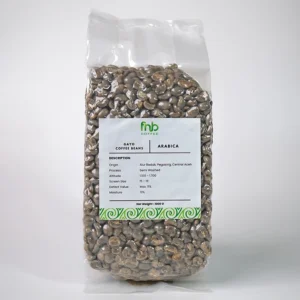
The physical appearance of the green Aceh Gayo coffee beans is also distinctive, largely due to the wet-hulled process. The beans often have a dark bluish-green or khaki-green color and a characteristic wrinkled or knobby appearance. This is a direct result of the hulling process occurring while the bean is still soft and malleable.
Grading of Aceh Gayo Coffee is typically based on bean size, defect count, and density. Common grades include Grade 1 (Triple Pick), which represents the largest bean size and lowest number of defects, followed by Grade 2 (Double Pick). The grading system ensures a level of uniformity for commercial roasting and brewing.
Technical Profile Summary
From a technical perspective, the profile of this origin can be summarized across several dimensions:
- Botanical type: Arabica coffee, often including local selections and varieties adapted to high-altitude conditions.
- Growing altitude: Approximately 1,200–1,700 meters above sea level, with some variation by sub-region and farm location.
- Climate and soil: Cool temperatures, high humidity, and volcanic soils that support slow cherry development and dense bean formation.
- Processing styles: Predominantly wet-hulled processing with some fully washed production, each influencing body, clarity, and acidity expression.
- Physical green-bean metrics: Screen size 15–19, maximum moisture content around 13 percent, and low defect values, often marketed as Grade 1.
- Sensory attributes: Nutty fragrance, chocolate and caramel notes, hints of vanilla or spice, soft to moderate acidity, medium to high body, and a clean or gently spiced finish.
- Caffeine range: Approximately 0.8–1.4 percent caffeine content, in line with typical Arabica values.
Coffee Varietals in the Gayo Highlands
The primary arabica varietal grown in the Gayo region is Typica. However, due to historical cross-breeding and a lack of strict varietal separation, many farms cultivate a mix of local Typica derivatives and hybrids, often collectively referred to as “Gayo Typica” or “Bergandal.” This genetic diversity within the coffee farms can contribute to the complexity found in the cup.
The Role of Organic Farming
A significant portion of Aceh Gayo Coffee is cultivated using semi-organic or organic practices. Many smallholder farmers use traditional methods with minimal chemical fertilizers and pesticides, often relying on natural compost.
While not all coffee from the region is certified organic, the farming approach contributes to the sustainable profile of the product and aligns with the growing global demand for naturally produced foods.
Conclusion
Aceh Gayo Coffee is a single-origin arabica coffee from the Gayo Highlands of Aceh, Indonesia, with a profile defined by its terroir and unique post-harvest processing. Its characteristics include a low acidity, a full, syrupy body, and a complex flavor profile with dominant earthy, spicy, and chocolatey notes.
The Giling Basah (wet-hulled) method is integral to developing these traits, and the coffee’s physical appearance reflects this process. As a geographically indicated product, Aceh Gayo Coffee represents a specific and significant origin within the global coffee landscape.
To source authentic and high-grade Aceh Gayo Coffee beans for your business, explore the dedicated sourcing platform at FnB Tech. You can find detailed information and procure premium Aceh Gayo Coffee directly through our product page for Aceh Gayo Coffee.

Pippo is passionate about coffee beans, exploring their unique varieties and cultural significance. He has a strong interest in agritech, focusing on innovations that drive sustainable farming. Beyond agriculture, he is also dedicated to the field of aquaculture and its future potential. His curiosity and enthusiasm connect these fields, reflecting a commitment to sustainability and growth.
Tags: aceh gayo aceh gayo coffee